I am a senior staff engineer at Qualcomm working on physical AI and autonomous driving. My research interests lie at the intersection of physical AI and generative AI. Specifically I am interested in multimodal large language models, world models, and their application for end-to-end autonomous driving.
Prior to joining Qualcomm, I did my PhD in Electrical Engineering at SUTD under supervision of Chau Yuen where I received the best PhD dissertation award for my PhD thesis. I also spent a year at Linköping University as a post doc working with Erik Larsson.
Selected Awards and Grants
- Qualcomm's IP Achievement Award, 2025 (extremely competitive).
- Best PhD Thesis Award from Singapore University of Technology and Design, 2019.
- FIRST Industry Workshop Outstanding Graduate Research Award, 2017.
- MediaTek Graduate Research Competition Award, 2017.
- Merlion PhD Award, 2014.
- President Graduate Fellowship from Singapore University of Technology and Design, 2013.
- Singapore Graduate Fellowship Award, 2013.
Selected Publications
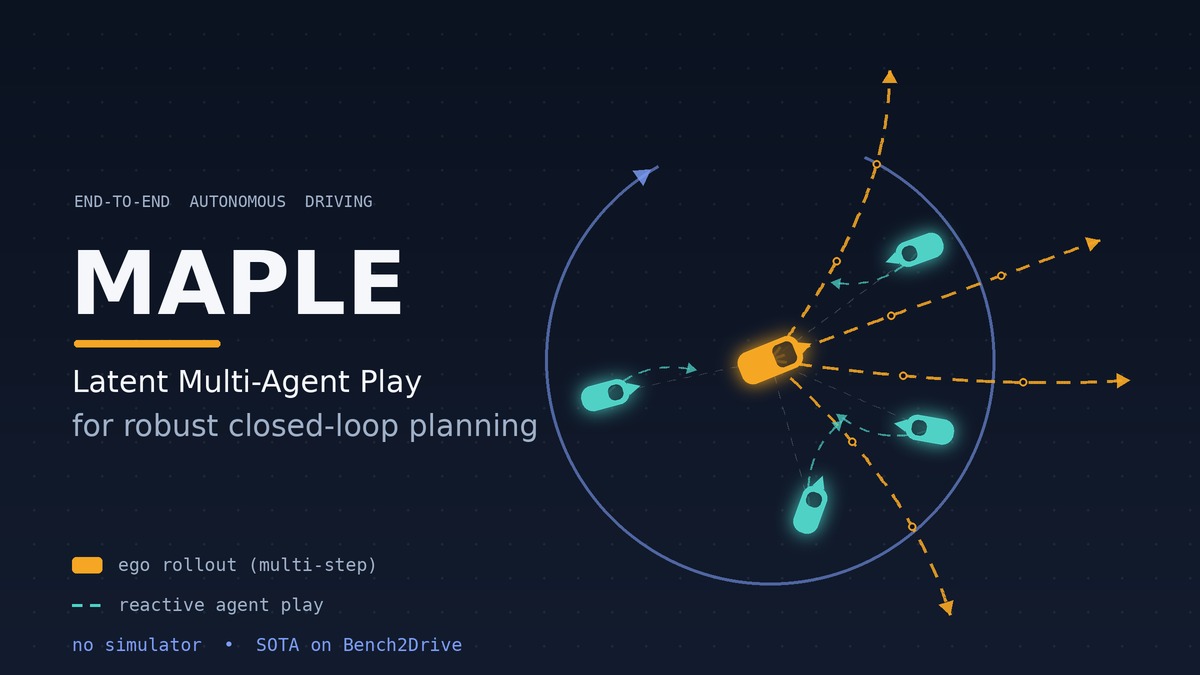
MAPLE: Latent Multi-Agent Play for End-to-End Autonomous Driving
What if a self-driving model could rehearse against its own traffic — and learn from every near-miss?
We introduce MAPLE: closed-loop, multi-agent training for VLA driving models, played out entirely in
latent space — no simulator required.
Core Idea: Reactive Rollouts 🤝 RL
The formula: 🚗 + 🚙🚕 → 🔁 (latent play) → 🏆 SOTA on Bench2Drive
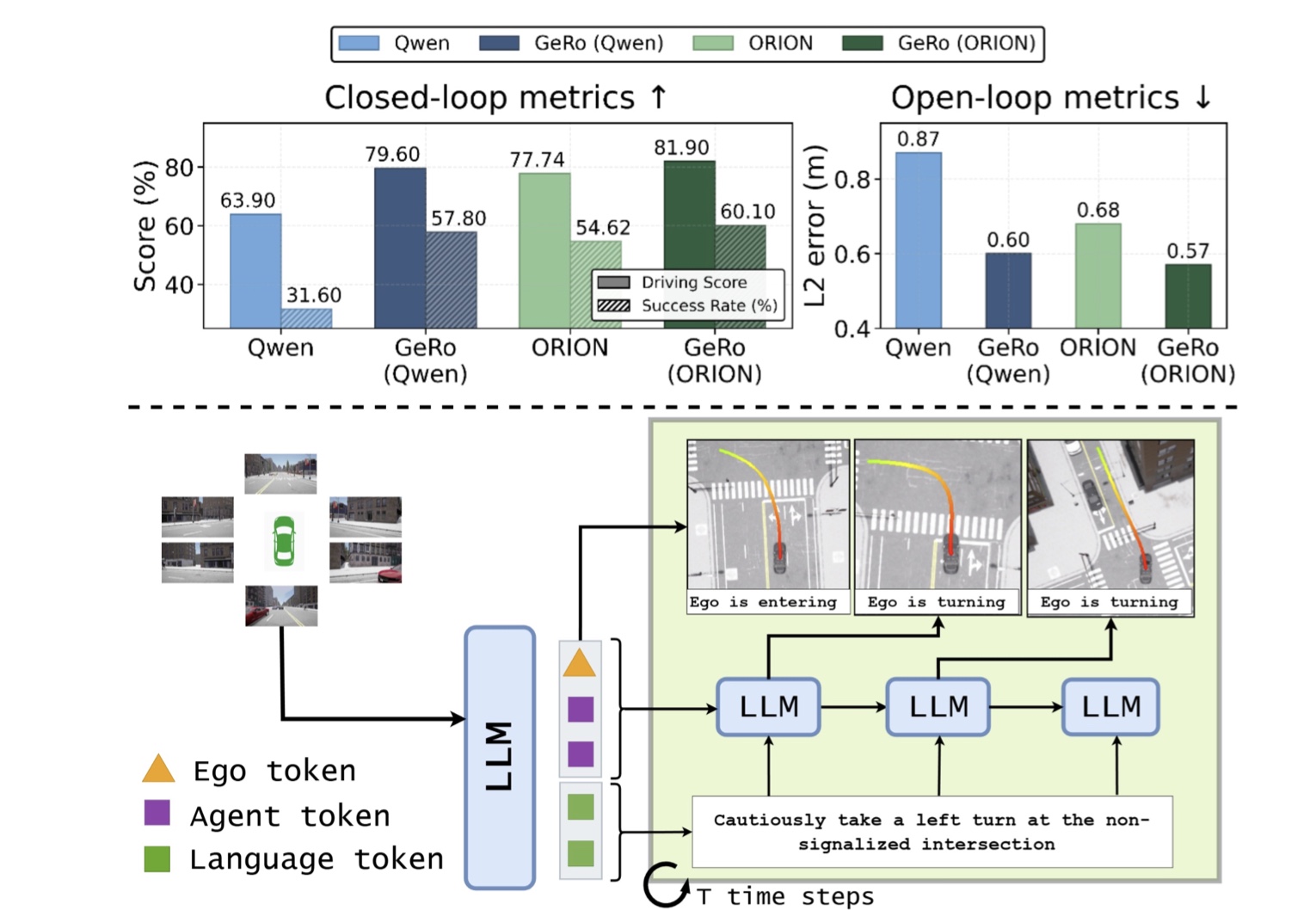
Generative Scenario Rollouts for End-to-End Autonomous Driving
What if your autonomous agent had an "internal theater" to rehearse the future?
We introduce GeRo: a VLA model augmented with a latent world model for autonomous driving.
Core Idea: World Model 🤝 VLA
The formula: 👁️ + 📝 → N × (🧠 + 🔮 → 🎮)
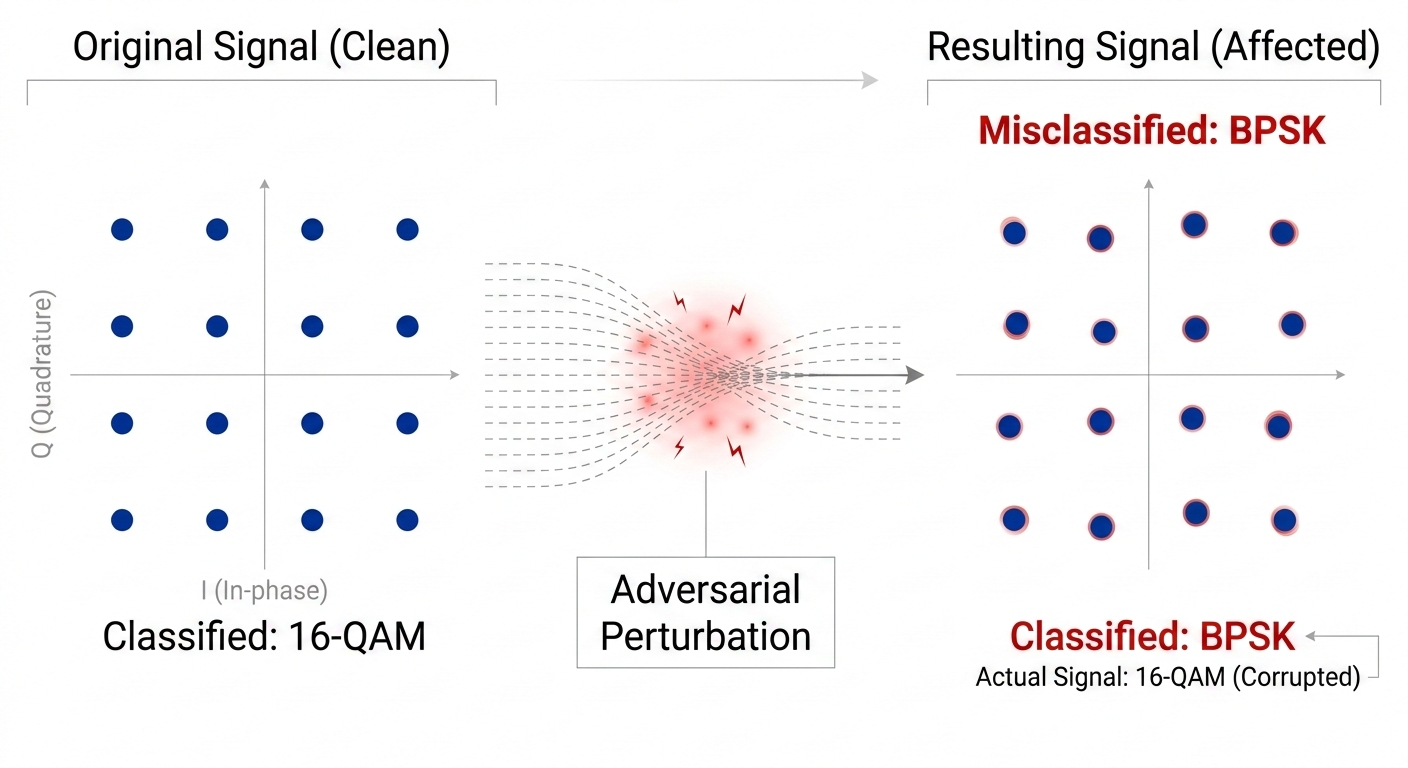
Adversarial Attacks on Deep-Learning Based Radio Signal Classification
As the pioneering work that introduced adversarial attacks to the wireless physical layer, this research exposes a critical vulnerability in DL-based systems. We demonstrate that nearly invisible adversarial perturbations can systematically trick modulation classifiers, outperforming traditional jamming techniques and fundamentally challenging the security of AI-driven communications.